Compared to the long-established families of Chamberlains, Peals and Blanfords, the Lilleys and Skinners are relative newcomers to the Cordwainers.
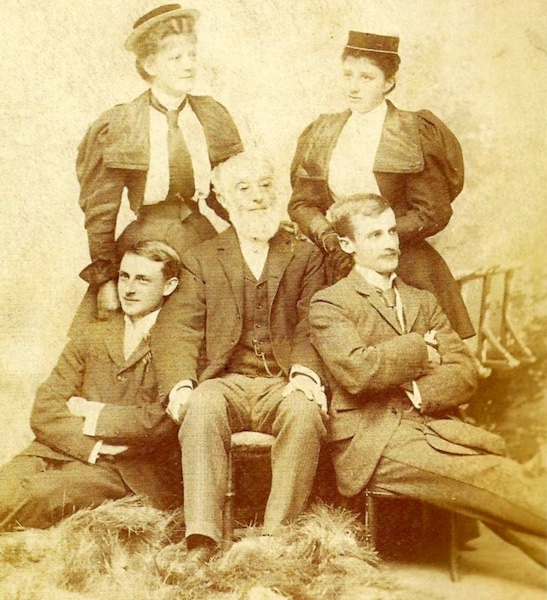
On 5 February 1896 two cousins, both aged 24, were admitted to the Company: Thomas Lilley (1872–1951) and George Herbert ‘Bert’ Skinner (1872–1931). They were very close, living next door to one another in Ealing and their family ties were strengthened further when they married sisters, Florence and Mabel Knight.
Today, 130 years and five generations later, the Lilleys and Skinners remain dedicated Cordwainers, although their direct connection to the shoe trade has disappeared.
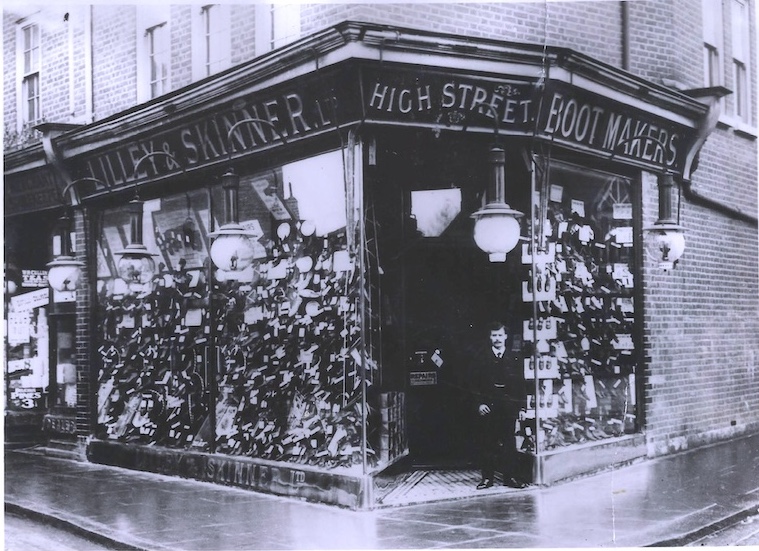
The origins of Lilley & Skinner Ltd (L&S) go back to 1835 to when Thomas Lilley (1814–99) opened a shoe warehouse in Southwark, before expanding into manufacturing in Northamptonshire, particularly at Rushden where Bert’s grandfather George Skinner was a farmer and butcher. In 1881, Thomas Lilley (1845–1916) and William Banks Skinner (1848–1914), Bert’s father, formed the partnership of Lilley & Skinner Ltd. Of note, the two men also worked together to establish in 1882 the technical school for the shoe trade which ultimately became the Cordwainers College.
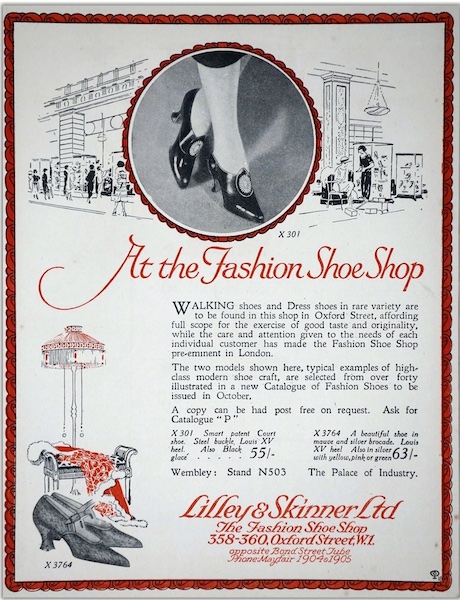
‘The Fashion Shoe Shop’
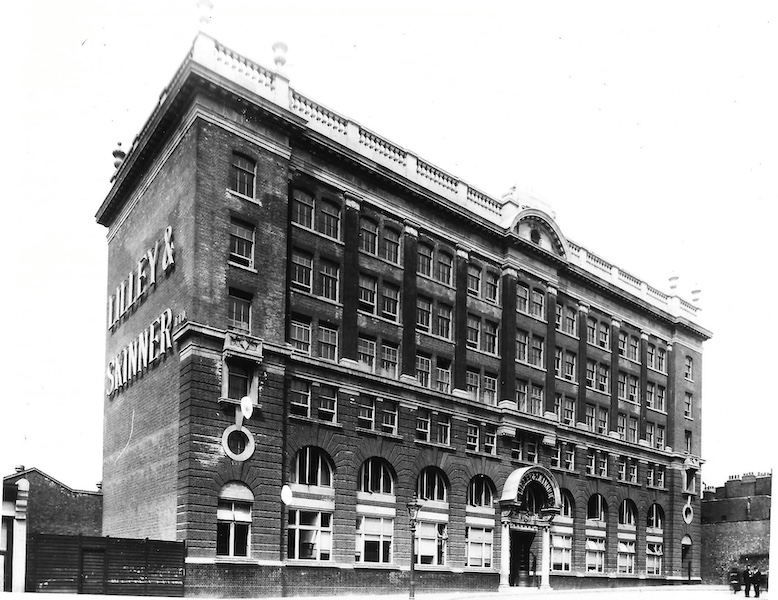
Lilley and Skinner flourished, opening a new warehouse and headquarters in King’s Cross in 1912. Seven years later, the company unveiled what was described as the ‘largest shoe store in the world’ on Oxford Street, occupying some 76,000 square feet over four floors.
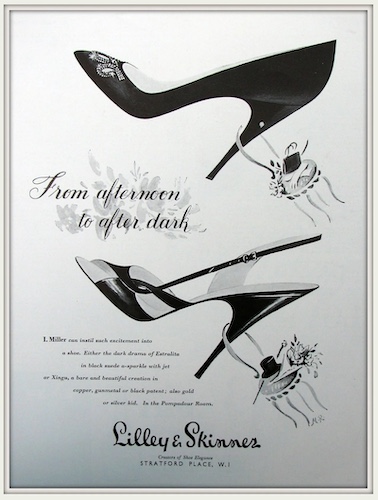
The company continued to expand between the wars and, by the time it merged with Saxone in 1957, operated around 470 shops nationwide. By the middle of the 20th century, Lilley & Skinner had become arguably the most significant footwear business associated with the Cordwainers.
The family’s direct involvement in the trade came to an end following the company’s acquisition by the British Shoe Corporation, part of Sears Holdings, in 1961. Michael Skinner (1919–93) remained Managing Director of Saxone, Lilley & Skinner until his retirement in 1973, becoming the last member of the family to work in the business.
The family’s links with shoemaking continued through Bert’s daughter, Betty, who married Dudley Church in 1929, a member of the famous Northamptonshire shoemaking family behind Church & Co. Their youngest son, John Church, joined the Cordwainers in 1958, later becoming Chairman of Church’s and serving as Master in 1998.In 2009, John’s son William and Jonathan, John’s second cousin, acquired Joseph Cheaney’s Shoe & Sons from Church’s. Both are Cordwainers: Jonathan served as Master in 2024 and William is a Court Assistant.
Bert’s younger brother ‘Jack’ Skinner (1894–1947) became a prominent member of the shoe trade, serving as President of the Wholesale Footwear Distributors Association and Vice President of the Boot Trade Benevolent Society. He joined the Cordwainers in 1928 and introduced his second son, my father, Banks Skinner, who became a Freeman in 1936.
Banks encouraged his two brothers to become Freemen, first Michael in 1950 and then John in 1951. Banks was the first Skinner to serve as Master in 1971, to be followed by Michael in 1985. Almost all of the next generation became Cordwainers: Jeremy serving as Master in 1991, Paddy in 1997, Rodney Parker in 1999, David in 2001 and Richard Brown in 2005.
The Lilleys were less prolific than the Skinners. Only one, James Lilley (1909-73), has held the office of Master. While his three sons joined the Company, the last of the Lilley line in the Company is Charles O’Brien who served as junior warden in 2000.
Like so many Cordwainers, the Skinners are rightly proud of their family’s footwear heritage. Lilley and Skinner was one of Britain’s best-known footwear retailers, its shops a familiar sight on high streets across the country. Its name survives today under the auspices of Shoe Zone, a reminder of a business that helped shape the British footwear industry in the 20th century.
Past Master Paddy Skinner
(Hon Archivist 2010-2017)